THEATER
Kim Ja-rim's Birth Centenary, The Emigration Ship Asks Again About the Time of Migration
The 11th Women's Theatre Festival will stage Kim Ja-rim's representative work The Emigration Ship to mark the playwright's birth centenary. The article summarizes the meaning and schedule of the play, which is set against Korea's 1960s emigration policy to Brazil.
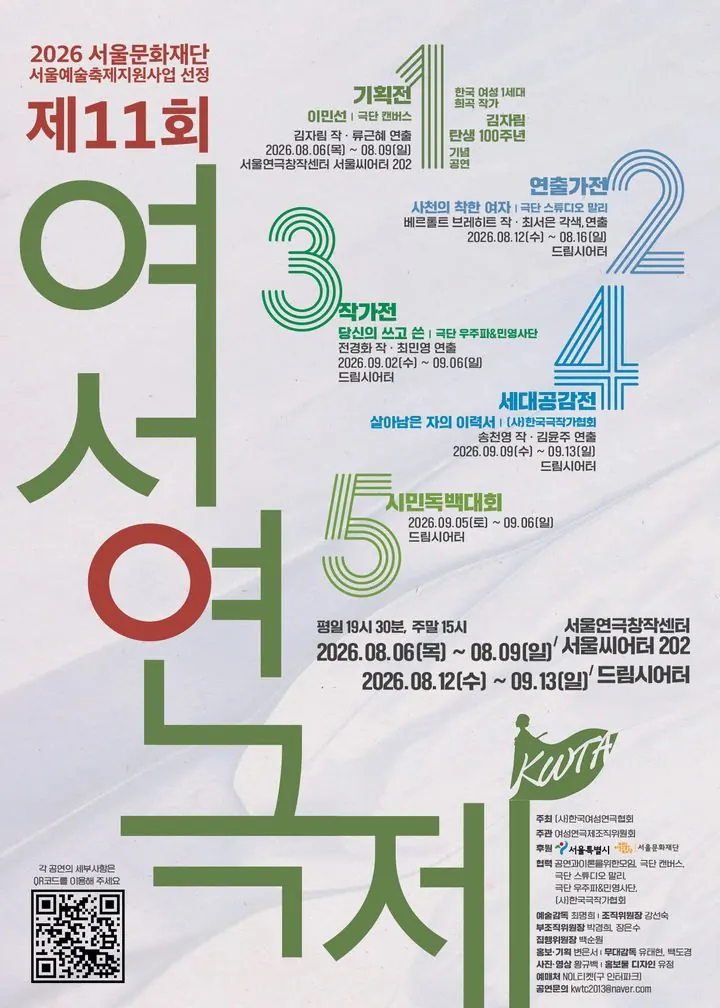
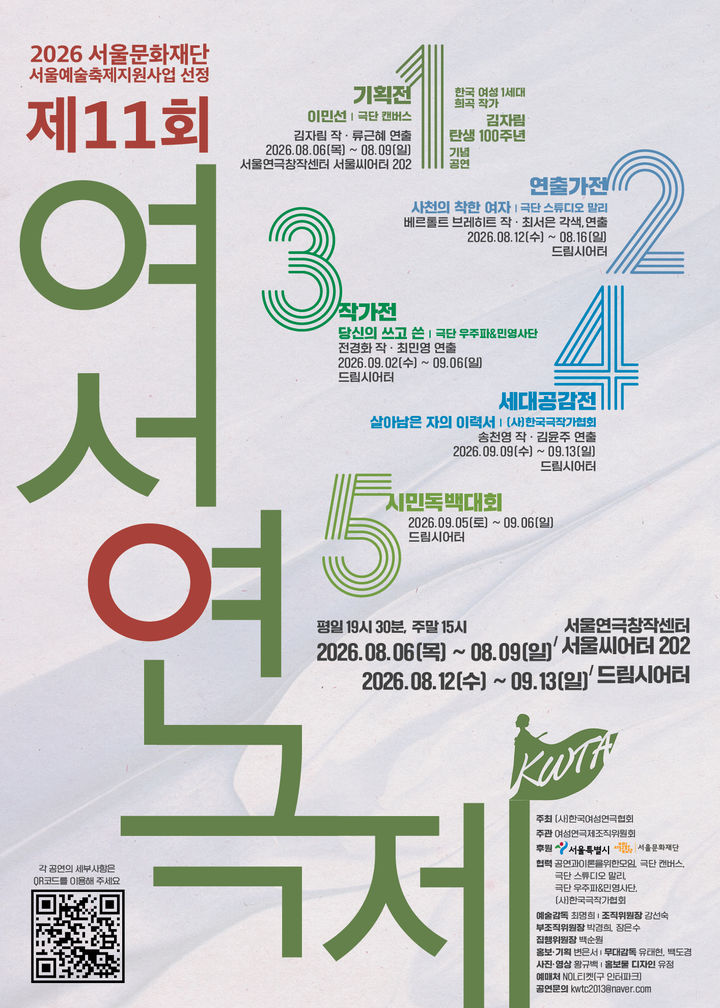
A stage that revisits an important scene in the history of Korean women's theater is about to open. To mark the birth centenary of Kim Ja-rim, the 11th Women's Theatre Festival will present her representative play The Emigration Ship as a planned performance. The production will run from August 6 to August 9, 2026, Korea time, at Seoul Theater 202 in the Seoul Theater Center.
The Emigration Ship, originally titled 이민선 in Korean, is set against Korea's 1960s emigration policy to Brazil. According to multiple reports and performance information, the work was written in 1964 and was staged at the National Theater in 1966. The fact that a work by a woman playwright was performed at the National Theater at the time is also being discussed for its theater-historical significance. This production is not simply a restoration, but a project that places Kim Ja-rim as a writer and her questions back before today's audience.
Kim Ja-rim has been introduced in several reports as Korea's first professional woman playwright. She began her playwriting career in earnest after Whirlwind was selected in the Chosun Ilbo Spring Literary Contest in 1959, and she has been evaluated as a writer who used stage language to address women's lives, social change and the relationship between family and institutions. This is also why the Women's Theatre Festival is treating Kim's birth centenary as a separate project. Beyond commemorating one writer, the occasion becomes a chance to look back at how the place of women playwrights has been made within modern Korean theater.
This staging of The Emigration Ship is directed by Ryu Geun-hye, who has been introduced as a first-generation woman director. The cast includes Ma Heung-sik, Yoon Gwan-yong, Kang Hee-young, Byun Eun-young, Kang Sun-sook, Lee Yoon-sang, Hwang Jung-won, Koo Ja-hwan, Kim Dong-hyun, Lee Yeon-joo, Park Sae-seul, Kim Sang-woo, Jung Si-yoon, Park Ri-jin, Lee Seung-eun, Eun Sung-jun, Kim Ki-beom, Kang Da-young and Kwon Il-shim. Official performance information also lists some showings with a running time of 100 minutes and an age rating of 12 and above.
The play is set in the 1960s. Under the government's emigration policy to Brazil, three families waiting for the fourth emigration ship stay at the Bohemian Hotel. They hope for better lives, but as the departure approaches, legal issues involving some family members and the possibility of delayed departure leave them in anxiety. The play does not treat emigration as only a romantic movement. It follows the way national policy, livelihood, cracks within families and hopes and fears toward an unfamiliar land collide in one space.
At this point, The Emigration Ship does not remain only an old period play. Overseas emigration in the 1960s was tied to the economic pressure, population issues and development logic Korean society was facing at the time. For individuals, however, emigration is a change in the direction of life before it is an institutional choice. For some, it is escape. For others, it is a method of survival. For still others, it is a decision that requires persuading family members. The meaning of staging The Emigration Ship again now lies in handing this old question back to today's audience.
The framework of the Women's Theatre Festival is also important. The 11th Women's Theatre Festival has been organized to illuminate both the history and present of women's theater. Among its programs, the planned performance The Emigration Ship places the name of playwright Kim Ja-rim at the front. It asks whether the achievements of women playwrights have been sufficiently recorded and restaged in Korean theater history, and how a work left as a classic can be reread through today's stage language.
Restaging a classic is different from simple reproduction. Especially for a work like The Emigration Ship, which is grounded in the policies and social atmosphere of a specific period, the stage today needs to create both distance and points of contact that the audience can receive. This is why the production is drawing attention. The key point to watch is what kind of conversation is created between the period specificity of Kim Ja-rim's original work and the contemporary audience's sense of movement, anxiety and survival.
The 11th Women's Theatre Festival has been introduced as opening on August 6, 2026, and continuing into September. The Emigration Ship is placed at the starting point as a planned performance. The fact that the festival's first stage is a work by Kim Ja-rim shows what questions the festival is placing at its center this year. In a space looking back on a century of women's theater, The Emigration Ship is positioned not as a work from a previous era, but as a text that speaks again to the present audience.
Summary Points
- The planned performance
The Emigration Shipat the 11th Women's Theatre Festival is scheduled to run from August 6 to August 9, 2026, Korea time, at Seoul Theater 202 in the Seoul Theater Center. - The production commemorates the birth centenary of Kim Ja-rim, who has been introduced in several reports as Korea's first professional woman playwright.
The Emigration Shipdeals with the anxiety and conflict of three families against the backdrop of Korea's 1960s emigration policy to Brazil.- The work was written in 1964 and staged at the National Theater in 1966, and is discussed in connection with the theater-historical position of Korean women playwrights.
- Showtimes, seat availability and ticketing information should be checked through the latest notices from the organizer and ticketing platforms.