NEWS
Lee Su-hyun Sings Summer Again With Blue Coral Reef, the Third J-POP REMAKE Release
AKMU's Lee Su-hyun released Blue Coral Reef, the third track from the J-POP REMAKE project, at 6 p.m. on August 18, 2026, Korea time. The article looks at Seiko Matsuda's 1980 original, Kangnam's project and the Mukho Port music video starring actor Shin Sia.
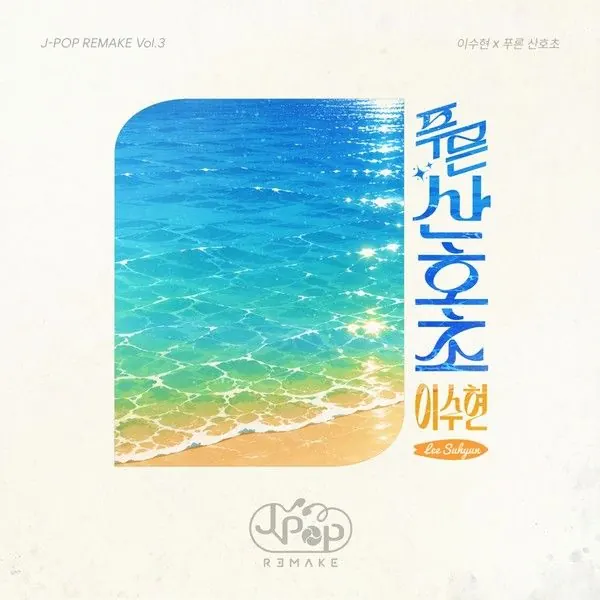
AKMU's Lee Su-hyun has re-sung Japanese singer Seiko Matsuda's signature songBlue Coral Reef. The third release from theJ-POP REMAKEproject featuring Lee Su-hyun was released through online music platforms at 6 p.m. on August 18, 2026, Korea time, with a music video starring actor Shin Sia also introduced.
AKMU's Lee Su-hyun is presenting a Japanese pop classic with a new voice and a summer mood. According to multiple reports, Lee released Blue Coral Reef, the third track from the J-POP REMAKE project, at 6 p.m. on August 18, 2026, Korea time. The original song is Seiko Matsuda's 1980 release Aoi Sangoshou, also widely rendered in English as Blue Lagoon. A song long remembered for its bright melody and refreshing image has been placed back into the digital music market through the interpretation of a Korean vocalist.
This work is not simply a matter of singing an old hit again. J-POP REMAKE has been introduced as a project that reconstructs representative Japanese songs from earlier eras through the colors of Korean artists. It was planned by singer and broadcaster Kangnam. Earlier releases in the project included Girls' Generation member Taeyeon's Bansanka and Hanroro's version of A Cruel Angel's Thesis, widely known as the theme song of the Japanese animation Neon Genesis Evangelion. Lee Su-hyun's Blue Coral Reef is the third release continuing that line.
What matters in a remake project is the distance between memory of the original and the new interpretation. Listeners who know the original expect a familiar melody, while those encountering the song for the first time hear the present-day arrangement and vocal performance first. How that gap is adjusted often decides whether a remake works. In Lee Su-hyun's case, her clear and warm tone has long been considered one of her strengths. For a song like Blue Coral Reef, which brings to mind summer light, the sea and a sense of fluttering excitement, the vocal itself becomes a major device shaping the song's image. This version keeps the original's bright and buoyant mood while adding Lee's natural, delicate vocal tone and a more contemporary sound. The light chorus melody and her refreshing timbre preserve the retro feeling of the original while creating a newer sensation.
Blue Coral Reef is known as one of the songs that symbolizes the bright mood of 1980s Japanese idol pop. It is classified among Seiko Matsuda's early signature songs and has often been consumed within Japanese popular music as a track that evokes both summer imagery and a youthful sensibility. The fact that a Korean artist is re-singing such a song shows how borders and generations are crossing in the recent music market.
Lee Su-hyun's vocal takes on a fairly clear role inside this project. Through AKMU activities, she became familiar to the public through plain diction, a distinct tone and a singing style that does not push emotion too heavily. The remake of Blue Coral Reef sits where those qualities meet the song's bright mood. Rather than foregrounding vocal technique, the track feels closer to following the movement of the melody naturally and reorganizing the original song's cool impression through a present-day sound.
The music video is also an important element in explaining the image of this release. Actor Shin Sia appears in the video, which is built around the summer sea at Mukho Port in Gangwon Province. Blue water, sunlight and a retro atmosphere are used to visualize the seasonal feeling of the song. If the audio re-sings a summer melody, the music video shows that sensation through space and the movement of a person.
Shin Sia expresses the excitement of summer and a moment of youth while walking along the shore. In today's music market, where songs and videos are consumed together, a music video is not just promotional material but content that shapes a track's first impression. This is especially true for a remake release, because the original song already carries its own image. The visual direction of the new version can significantly affect how listeners receive the song.
The release also connects with the recent revival of remake projects in the Korean music market. A remake is both a way to introduce an unfamiliar song and a way to connect a familiar song with new listeners. Some remake projects follow the original sentiment closely, while others shift the time period and genre to create a very different texture. Lee Su-hyun's Blue Coral Reef can be seen as a case that keeps the original song's seasonal feeling and melody while updating the sound and vocal texture for the present.
The idea of a J-pop remake project itself is also worth examining. Korean popular music has exchanged influence with Japanese music in many different ways for a long time. In the past, Japanese music was consumed more restrictively under limits in broadcasting and album distribution. Now, online platforms, short-form video, YouTube and streaming services allow songs to circulate again across generations and borders. In this situation, a Korean artist re-singing an older Japanese pop song can be understood not merely as an adaptation or cover, but as an attempt to move musical memory into a new listening environment.
Summary Points
- AKMU's Lee Su-hyun released the remake track
Blue Coral Reefat 6 p.m. on August 18, 2026, Korea time. - The song is the third release from the
J-POP REMAKEproject planned by Kangnam. - The original is Seiko Matsuda's 1980 song
Aoi Sangoshou, also widely rendered in English asBlue Lagoon. - Earlier project releases included Taeyeon's
Bansankaand Hanroro'sA Cruel Angel's Thesis. - The music video stars actor Shin Sia and uses the summer sea around Mukho Port in Gangwon Province as a key image.