Film
Jeju 4·3 Film My Name Wins NYAFF Audience Award, Bringing a Story of Memory to Overseas Viewers
Jeju 4·3 film My Name won the Audience Award at the 25th New York Asian Film Festival. Here is a look at its international path from Berlin and Udine to New York, Barcelona and Kaohsiung.
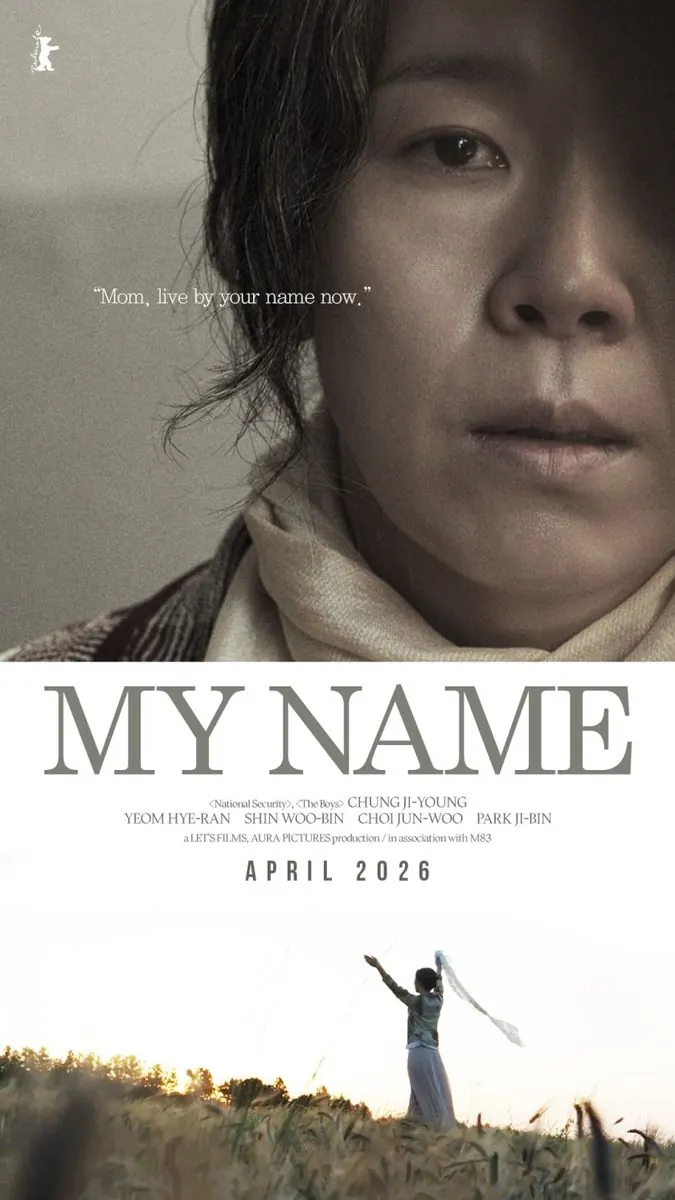
The Jeju 4·3 film "My Name" won the Audience Award at the 25th New York Asian Film Festival. According to multiple reports, the film was officially invited to the festival, which ran from July 10 to 26, 2026 KST, and was named an audience award winner after receiving a strong response from local viewers following its July 16, 2026 KST screening. After being invited to the Forum section of the 75th Berlin International Film Festival and winning the Audience Award at the 28th Udine Far East Film Festival, "My Name" has now also been chosen by viewers in New York, expanding the memory of Jeju 4·3 and its message of peace and human rights to overseas audiences.
The film "My Name" has met audiences again in New York. Centered on Jeju 4·3, the work won the Audience Award at the 25th New York Asian Film Festival. According to the Jeju 4·3 Peace Foundation and related reports, this year's New York Asian Film Festival was held from July 10 to 26, 2026 KST, and "My Name" achieved the result after being screened as an official selection.
This award goes beyond the result of a single festival. Before its theatrical release, "My Name" was invited to the Forum section of the 75th Berlin International Film Festival, and it was also reported to have won the Audience Award in the main competition at the 28th Udine Far East Film Festival in April 2026 KST. With another audience award at the New York Asian Film Festival, the film has created a flow in which it is introduced to viewers in Europe and North America in sequence.
"My Name" has been introduced as a film directed by Chung Ji-young and featuring Yeom Hye-ran in a key role. NewsPim described the film as a cross-generational mystery drama in which 18-year-old Young-ok and his mother Jeong-sun, who carries the painful history of Jeju in 1949, face the truth across 78 years of time. Jeju regional media outlets have noted that the work turns the memory and reconciliation of Jeju 4·3 into a story linking generations.
Jeju 4·3 is a painful event in modern Korean history. When a film deals with this history, the important question is not only how it explains the incident, but how it handles the time that followed and the memories of those left behind. "My Name" is being introduced as a work that brings Jeju 4·3 to contemporary viewers through the past and present, family memory and the process of confronting truth. The point that moved overseas viewers may also lie beyond the historical background itself, in the human experiences of loss, recovery and reclaiming a name.
Still, it is difficult to reduce overseas audience response to one reason. An audience award is meaningful because it reflects a choice made directly by viewers at the festival, but which scenes or themes contributed most strongly to the award can only be discussed more specifically if detailed official evaluations from the festival are released. What is currently confirmed is that "My Name" received strong support in the New York Asian Film Festival audience vote and won the Audience Award.
The production background is also worth noting. According to several reports, "My Name" was produced through the "4·3 Film Scenario Contest" jointly promoted by the Jeju 4·3 Peace Foundation and the Jeju Free International City Development Center. It is a case in which the expansion of local historical memory into cinema was connected to institutional support. It is meaningful that cultural content dealing with Jeju 4·3 is not remaining a one-off project, but is moving to wider audiences through festivals, theaters and online platforms.
The New York award is not only an achievement for "My Name." During the same period, the feature film "Hallan," which also deals with Jeju 4·3, was officially invited to the 25th New York Asian Film Festival and selected as a nominee for Best Feature Film. "Hallan" is directed by Ha Myung-mi and stars Kim Hyang-gi, telling the story of a mother and daughter who cross mountains and seas to survive the tragedy of Jeju 4·3 in 1948.
"Hallan" has also continued its overseas journey. According to reports, the film began with a world premiere at the Aichi International Women's Film Festival, then moved through the competition section of the Florence Korea Film Fest, an official invitation to Helsinki Cine Aasia and theatrical release in Japan. Recent reports also said the film reached No. 1 in Netflix's domestic film category after being released on the platform.
The fact that "My Name" and "Hallan" were mentioned at overseas festivals around the same time shows the expandability of Jeju 4·3 cinema. The two works take different approaches, but both move the wounds and memory of Jeju 4·3 into individual lives and family stories. If a historical event is explained only directly, overseas audiences may find it difficult to approach emotionally. But stories about a character's journey, family loss, names and memory can become emotional passages that cross borders.
"My Name" still has more opportunities to meet overseas audiences. According to reports, the film has been officially invited to the competition section of the 14th Asian Film Festival Barcelona, which will be held in Spain in October 2026 KST. It has also been invited to the Panorama section of the 26th Kaohsiung Film Festival in Taiwan, where it will meet Asian viewers again. Chung Ji-young and Yeom Hye-ran are reportedly scheduled to visit the festivals and communicate with audiences during the events.
This flow becomes clearer when the nature of each festival is considered. The Forum section of the Berlin International Film Festival is known as a section that looks at both artistry and social perspective, while the Udine Far East Film Festival is a major stage connecting Asian cinema with European audiences. The New York Asian Film Festival is one of the important windows introducing Asian films to North American viewers. With invitations to Barcelona and Kaohsiung also following, "My Name" is meeting different audience groups across Europe, North America and Asia.
This is also why the audience award result is especially important. Jury awards at film festivals reflect the judgment of specialists. Audience awards, by contrast, are closer to the direct choice of viewers who watched the film at the venue. The fact that the specific subject of Jeju 4·3, a part of modern Korean history, reached New York audiences makes it possible to read the film as a work that created universal emotions and questions beyond regional history.
The historical context of Jeju 4·3 is not something that can be translated simply. The emotions overseas audiences feel while watching the film may differ from the weight of memory felt by Korean viewers. But what cinema can do is build a bridge over that difference. Even viewers who do not know the full background of the incident can approach the story through the characters' sorrow, questions and willingness to face the truth.
The film's points of contact with domestic viewers are also widening. According to reports, "My Name" has been available since July 30, 2026 KST through various online platforms including IPTV, cable TV VOD, KT skylife, Wavve, Watcha, Coupang Play and YouTube Movies. A TVING release is also reportedly ahead. This creates a structure in which viewers who missed the theatrical run can encounter the film through online platforms.
The move to online platforms does not merely mean an increase in distribution routes. Accessibility is important for films dealing with Jeju 4·3. Works about historical events gain greater meaning when they continue beyond theatrical viewing into schools, local communities, family viewing, discussion and records. Online release becomes a foundation that can make this kind of expansion possible.
Chung Ji-young is a director who has steadily made films dealing with Korean society's history, institutions and individual lives. While "My Name" handles the historical subject of Jeju 4·3, it approaches viewers through a story of generations and family. Yeom Hye-ran is an actor who has shown strong lived-in presence and emotional density across Korean film and drama. This combination can help move a historical subject into the faces and lives of characters rather than treating it only declaratively.
The title "My Name" is also deeply symbolic. A name is the most basic language that confirms a person's existence. When dealing with an event like Jeju 4·3, in which many people were sacrificed without their names being remembered or remained as memories that could not be spoken for a long time, the act of asking for a name becomes an act of recovering memory. The title asks the viewer, "Whose story is this?" while also working as a way to call forgotten names again.
Words that repeatedly appear in reports around this award include "peace," "human rights," "coexistence" and "memory." These words often appear when Jeju 4·3 is addressed culturally. But for a film to actually reach viewers, those values must be made persuasive within characters and scenes. This is why the New York audience award is meaningful. A declaration of values alone is unlikely to win audience votes. Viewers choose a work when the story gains emotional persuasion.
Overseas festival awards and invitations can also become important signals for the domestic independent and art film market. In Korea's commercial film market, films about historical subjects are not always easy choices in production and distribution. Works dealing with regional history, state violence, memory and healing can be far from commercial formulas. But when invitations and awards continue at overseas festivals, paths open for these films to meet international audiences, and they may also be re-examined domestically.
"Hallan" also deserves attention alongside this flow. If "My Name" unfolds Jeju 4·3 around questions of generations, names and truth, "Hallan" looks at the wound of the incident through the survival journey of a mother and daughter. The fact that the two works meet overseas audiences with different narrative structures shows that Jeju 4·3 cinema is not confined to one form. As films dealing with historical events become more diverse, the doors through which audiences can enter also become wider.
The overseas achievements of Jeju 4·3 films are not simply local news. They show how a specific event in modern Korean history can be translated into an international language through cinema. Even to viewers who do not know the background of the incident, questions about loss and names, family and memory, peace and human rights can be conveyed. The New York Audience Award for "My Name" can be seen as a result that confirmed that possibility.
There are two points to watch from here. One is whether the film's overseas festival path leads to actual distribution and audience expansion. Screenings in Barcelona and Kaohsiung will be opportunities to introduce the work again to viewers in different cultural spheres. The other is how the film will be read after its domestic online platform release. A film that has moved from theaters into homes can stay longer in viewers' everyday lives.
The New York Audience Award won by "My Name" is meaningful because a painful regional memory, Jeju 4·3, was chosen by audiences on a festival stage. The award is both an achievement for one film and a signal that cultural efforts to remember and communicate Jeju 4·3 can reach overseas viewers. Based on the results confirmed so far, "My Name" has become a quietly important work showing an international movement in Korean cinema in 2026.
Summary Points
- Jeju 4·3 film "My Name" won the Audience Award at the 25th New York Asian Film Festival.
- The festival ran from July 10 to 26, 2026 KST, and "My Name" received a local audience response after its July 16, 2026 KST screening.
- "My Name" was produced through the "4·3 Film Scenario Contest" jointly promoted by the Jeju 4·3 Peace Foundation and JDC.
- The film won the New York audience award after being invited to the Forum section of the 75th Berlin International Film Festival and winning the Audience Award at the 28th Udine Far East Film Festival.
- It has also been invited to the competition section of the 14th Asian Film Festival Barcelona in October 2026 KST and the Panorama section of the 26th Kaohsiung Film Festival in Taiwan.
- Jeju 4·3 film "Hallan" was also officially invited to the same New York Asian Film Festival and selected as a nominee for Best Feature Film.